



BY  GENN
GENN
2026/05
Blog
Zinc Wire vs Galvanized Coating: Key Differences Explained
Zinc Wire vs Galvanized Coating: Key Differences Explained
What Is the Fundamental Difference Between Zinc Wire and Galvanized Coating?
Zinc wire and galvanized coating are often confused, but they are two completely different corrosion protection systems.
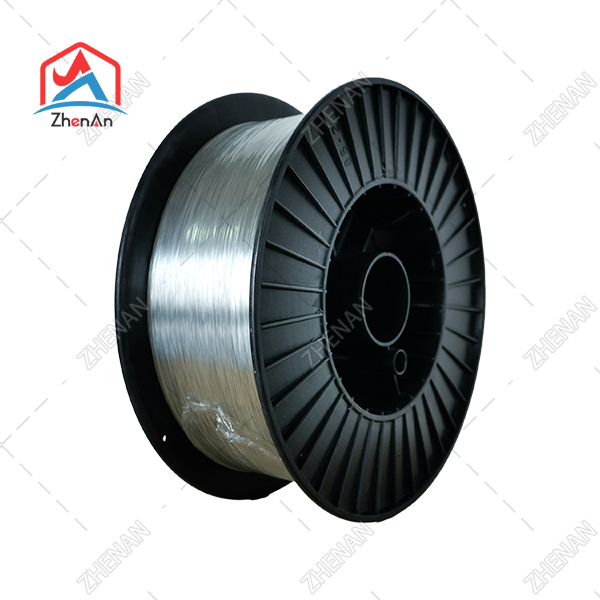
- Zinc wire = raw industrial material used for thermal spraying or metallizing
- Galvanized coating = finished protective layer formed on steel via hot-dip or electrochemical process
In simple terms:
- Zinc wire is the input material
- Galvanizing is the coating process/result
Zinc wire is melted and sprayed onto a surface using arc spray or flame spray equipment, forming a protective zinc layer. Galvanizing, on the other hand, is created by immersing steel into molten zinc at around 450°C.
How Do Zinc Wire and Galvanized Coating Work in Practice?
Zinc wire is used in thermal spray systems, where it is electrically melted and atomized into fine particles that bond with steel surfaces.
Galvanized coating is created through hot-dip galvanizing, where steel reacts directly with molten zinc to form a metallurgical bonding layer.
Key difference in mechanism:
- Zinc wire coating = mechanical bonding (sprayed layer)
- Galvanized coating = metallurgical alloy layer
This difference directly affects durability, repairability, and application flexibility.
Technical Specification Comparison Table
| Item | Zinc Wire (Thermal Spray) | Galvanized Coating |
|---|---|---|
| Form | Solid wire (0.8–3.17mm) | Solid zinc layer on steel |
| Process Temperature | ~400–450°C (spraying arc) | ~450°C (molten bath) |
| Coating Formation | Layer-by-layer deposition | Zinc-iron alloy layer |
| Bonding Type | Mechanical bonding | Metallurgical bonding |
| Repairability | Easy local repair | Difficult repair |
| Application Flexibility | High (field application) | Limited (factory process) |
| Thickness Control | Adjustable | Relatively fixed |
| Equipment Requirement | Spray system | Galvanizing plant |
Zinc Wire vs Galvanized Coating: Performance Differences
Zinc wire coatings created by thermal spraying provide flexible protection systems, especially for large structures that cannot be dipped in zinc baths.
Galvanized coatings provide strong factory-controlled protection, commonly used for standardized steel products.
Corrosion Protection Behavior
- Zinc wire spray coating: fast sacrificial action, ideal for repair and maintenance systems
- Galvanized coating: long-term stable protection with zinc-iron alloy barrier
Surface Adaptability
- Zinc wire: suitable for bridges, pipelines, offshore structures
- Galvanized coating: suitable for bolts, sheets, structural components
Maintenance Advantage
- Zinc wire coatings can be repaired locally without dismantling structure
- Galvanized coatings require reprocessing or replacement
Application Comparison: Where Each One Is Used
Zinc Wire Applications
- Steel bridges corrosion protection
- Offshore wind power towers
- Pipeline anti-corrosion coating
- Shipbuilding maintenance systems
Galvanized Coating Applications
- Construction steel beams
- Fasteners and bolts
- Steel sheets and fencing
- Factory-produced steel components
Cost and Efficiency Comparison
| Factor | Zinc Wire System | Galvanized Coating |
|---|---|---|
| Initial Cost | Medium | Low–medium |
| Installation Cost | Higher (spray equipment) | Factory-based (efficient) |
| Maintenance Cost | Low (repairable) | Medium–high |
| Lifecycle Flexibility | High | Fixed system |
Zinc wire systems are often chosen for long-life infrastructure maintenance, while galvanizing dominates mass production.
Which One Is Better for Industrial Projects?
There is no absolute “better” option—it depends on the engineering requirement:
- Choose zinc wire if:
- Structure is already built (repair/upgrade)
- Large-scale steel infrastructure is exposed to harsh environments
- On-site corrosion protection is needed
- Choose galvanizing if:
- Products are mass-produced
- Factory-based uniform coating is required
- Cost efficiency in production is priority
Why Zinc Wire Is Increasingly Used as an Alternative
In modern infrastructure engineering, zinc wire thermal spray systems are expanding because:
- No size limitation (can coat huge structures)
- No need to dismantle structures
- Repairable in the field
- More flexible coating thickness control
This makes zinc wire a strategic upgrade solution for aging steel infrastructure worldwide.
Conclusion
Zinc wire and galvanized coating are both zinc-based protection systems, but they differ in process, flexibility, and application method.
- Zinc wire = flexible, repairable, field-applied protection system
- Galvanized coating = factory-formed, standardized protective layer
For modern infrastructure maintenance, zinc wire is increasingly preferred due to its adaptability and repair advantages.
FAQ
1. Is zinc wire the same as galvanizing?
No. Zinc wire is a material used for spraying, while galvanizing is a coating process.
2. Which lasts longer, zinc wire coating or galvanizing?
Both can last decades, but performance depends on environment and coating thickness.
3. Can zinc wire replace galvanizing?
Yes, especially for maintenance, repair, and large structures where galvanizing is not possible.
4. Is zinc wire coating more expensive?
Initial cost is higher, but long-term maintenance cost is often lower.
5. What industries prefer zinc wire spraying?
Bridges, offshore structures, pipelines, and wind power industries.
6. Why is galvanizing still widely used?
Because it is efficient for mass production and factory-controlled coating quality.
Contact Us
If you are sourcing zinc wire for thermal spraying, corrosion protection, or infrastructure maintenance, we can provide stable industrial supply and customized specifications.
📧 Email: market@zaferroalloy.com
📱 WhatsApp: +86 15518824805
We support:
- 99.9%–99.995% high purity zinc wire
- Diameter range: 0.8mm–3.17mm
- OEM packaging for export
- Fast quotation within 24 hours
- Technical support for spray applications