




Industrial Grade Silicon Carbide (SiC) – ZhenAn International
-
Dual-Alloying Efficiency: Supplies both high-purity Silicon and Carbon in a single addition, streamlining the smelting process.
-
Aggressive Cost Reduction: A high-performance, lower-cost alternative to Ferrosilicon (FeSi) and premium recarburizers.
-
Thermal Energy Recovery: The exothermic reaction releases internal heat, significantly cutting furnace electricity consumption.
-
Enhanced Metal Quality: Superior deoxidation properties lead to fewer inclusions and higher mechanical strength in the final product.
-
Verified Global Supply: 150,000-ton annual capacity with guaranteed chemical consistency and SGS/BV third-party certification.
Overview of Industrial Grade SiC
In modern heavy industry, the ability to maintain tight chemical tolerances while reducing input costs is the key to profitability. Traditional alloying agents often introduce variability and high slag volumes, which complicate the production of high-grade steel and iron.
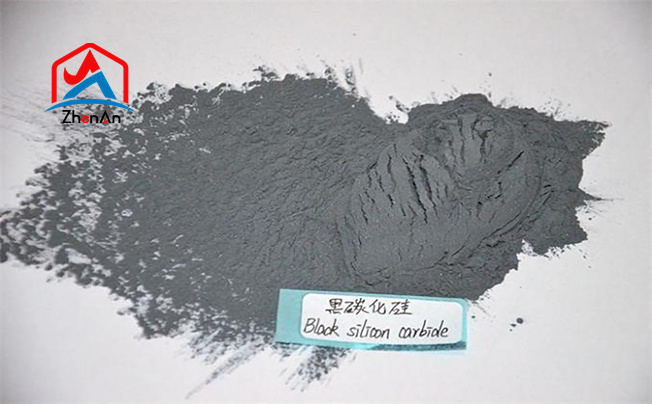
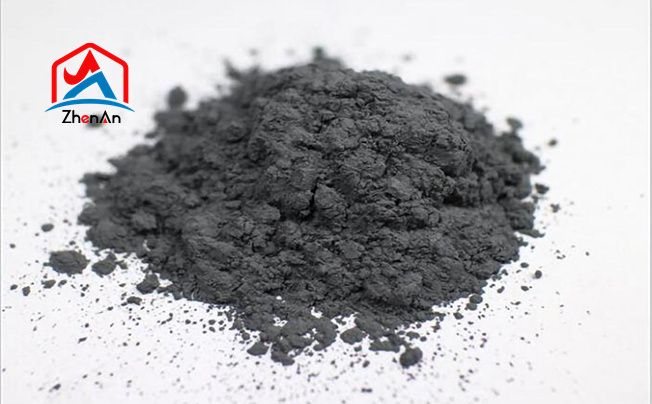
ZhenAn’s Industrial Grade Silicon Carbide (SiC) is a versatile metallurgical reagent designed for high-volume efficiency. Produced in electric resistance furnaces at temperatures exceeding 2500°C, our SiC provides the extreme hardness and chemical stability required for deoxidation, inoculation, and refractory manufacturing. It is the “workhorse” material for plants seeking to optimize their “cost-per-ton” metrics.
Technical Specifications & Chemical Composition
ZhenAn provides a range of industrial grades, meticulously graded to ensure predictable carbon and silicon recovery rates in every heat.
| Component | Industrial Grade 88 | Industrial Grade 90 | Industrial Grade 95 |
| SiC Content | ≥ 88.0% | ≥ 90.0% | ≥ 95.0% |
| Free Carbon (F.C.) | ≤ 4.5% | ≤ 3.0% | ≤ 1.5% |
| Fe2O3 | ≤ 2.0% | ≤ 1.5% | ≤ 1.0% |
| Al2O3 | ≤ 1.5% | ≤ 1.2% | ≤ 0.8% |
| Moisture | ≤ 0.5% | ≤ 0.4% | ≤ 0.3% |
Key Industrial Applications: Steel, Foundry & Refractories
1. Steelmaking Deoxidation
Industrial SiC is a potent deoxidizer. It reacts with dissolved oxygen in the melt ($SiC + 2O \rightarrow SiO_2 + C$), reducing the activity of oxygen more effectively than ferrosilicon and leaving behind a cleaner metal matrix.
2. Iron Foundry Inoculation
In the production of gray and ductile iron, SiC acts as a powerful nucleating agent. It promotes graphitization, which prevents “chilling” (hard spots) and improves the machinability of the finished casting.
3. High-Performance Refractories
With a melting point near 2700°C and excellent thermal shock resistance, it is a primary raw material for kiln furniture, furnace linings, and crucibles used in high-heat environments.
The Exothermic Advantage in Smelting
One of the most significant benefits of industrial grade SiC is its thermodynamic behavior. Unlike many alloys that consume heat to melt, the oxidation of SiC is exothermic.
-
Energy Savings: It contributes heat energy back into the melt, potentially reducing induction furnace electricity usage by 15-25 kWh per ton.
-
Process Acceleration: The rapid heat release speeds up the dissolution of other alloys, shortening the overall tap-to-tap time.
Comparative Analysis: SiC vs. Traditional Additives
| Feature | Ferrosilicon (FeSi) | Recarburizer | ZhenAn Industrial SiC |
| Functionality | Silicon Source | Carbon Source | Si + C Dual Source |
| Energy Impact | Endothermic | Neutral | Exothermic (Saves Energy) |
| Slag Production | Moderate | High | Low (Cleaner Melt) |
| Cost Efficiency | High Price | Variable | Optimal ROI |
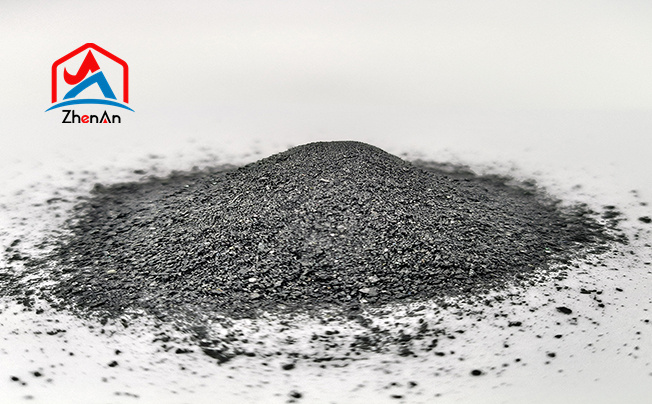
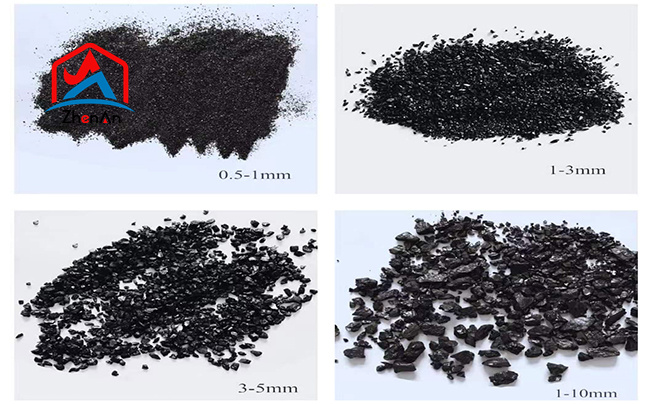
Available Formats: Lumps, Grains, and Briquettes
To ensure compatibility with different furnace charging systems, we offer several physical formats:
-
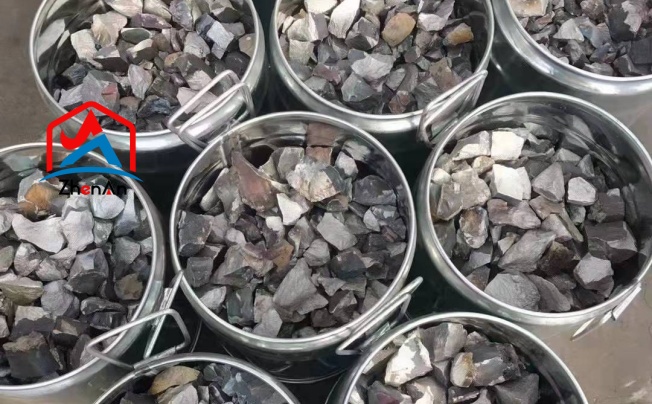
Industrial Lumps (10-50mm): Best for bulk charging in Electric Arc Furnaces (EAF).
-
SiC Grains (1-10mm): Optimized for ladle additions and quick chemistry adjustments.
-
SiC Briquettes: Uniformly shaped for automated dosing and precise weight control.
Why Partner with ZhenAn International?
ZhenAn International is a global leader in the manufacturing and export of high-grade metallurgical products.
-
Massive Capacity: Our 150,000-ton annual output ensures long-term contract stability.
-
Quality Verification: Every shipment is backed by an internal lab report and COA; we also support SGS/BV inspections.
-
Strategic Logistics: We provide flexible shipping terms (FOB, CIF, DDP) to major industrial hubs in the USA, Europe, and Asia.
-
Expert Consultation: Our technical team helps you calculate the optimal SiC-to-alloy replacement ratios for your specific production line.
Comprehensive FAQ Section
1. Can Industrial Grade SiC fully replace Ferrosilicon?
In many applications, yes. It provides a more cost-effective silicon source. However, the carbon recovery must be factored into your final chemistry. We can provide a conversion table for your specific steel grades.
2. Is SiC 88% pure enough for industrial applications?
Absolutely. While 90% and 95% grades are available, SiC 88% is the global “industrial workhorse” grade, providing the best balance between performance and cost-efficiency for most steelmaking and foundry needs.
3. Does SiC affect the sulfur or phosphorus levels in the steel?
Silicon carbide is naturally low in sulfur and phosphorus, which often makes it a cleaner alternative to certain grades of petroleum coke or lower-quality ferroalloys.
4. How does SiC improve the machinability of cast iron?
By promoting the formation of fine graphite flakes and preventing the formation of brittle iron carbides (white iron), SiC makes the resulting casting much easier to drill, mill, and turn.
5. What is the shelf life of SiC 1-10mm grains?
Silicon carbide is chemically inert and has an indefinite shelf life. We recommend storing it in a dry, covered warehouse to prevent moisture accumulation during furnace charging.
6. Can ZhenAn provide customized packaging?
Yes. We typically ship in 1-ton or 1.25-ton waterproof jumbo bags, but we can offer 25kg bags or specialized palletizing upon request.
Contact Our Specialist Team
Start optimizing your industrial process with ZhenAn’s high-performance Silicon Carbide today.
-
Company: ZhenAn International Co., Ltd.
-
Email: market@zaferroalloy.com
-
WhatsApp: +8615518824805


